Showing posts with label Worldbuilding. Show all posts

Friday, June 24, 2022

The Exorcised Cities live, amidst the dead world

 The Exorcised Cities of Liurza are a complicated intersection of city, state, territory and gang. They are the last bastions of human civilisation, the final seeds from which humanity may bloom after the Shattering. Each of them represent a mortal tenacity, an ingenuity and innovation built upon a reckless clinging to life. There is tension, a byproduct of decades of isolation and a deep mistrust. Brutal landwars and realpolitik is at play, the Cities famously "unrivalled under the sun, except for one another". Yet, they cling to each other in trade, their impenetrable gates wide open for the rich merchants that travel the White Roads. These immense highways of white salt (and the cartloads of silver that ride on them) are the sole reason Liurza remains a united country. Only the City of Parakris, the Sky-piercing Blade of the Heavens, is truly separated, by mountain first, undead horde second and forest of knives third. 

Corphaksa:

The Divine Spider sits upon its crystalline web of ivory roads, its every move sending shockwaves and reverberations. Corphaksa is the First and Greatest amongst the Exorcised Cities, the centre of Liurzan sovereignty and the heartbeat of its trade. From its architects came the salt walls that make up much of Corphaksa proper, as well as the spanning White Roads that bring seafood from the east, iron from the north and trinkets from the south. It sits upon the lip of Lake Yan, deathly to the sip. Corphaksa is said to be the City of many gods, and indeed we see rows and rows of temples lining its curving streets. In this centre of commerce and trade, the guilds battle each other for corporate supremacy. Every piece of silver was traded for with blood and steel. The poor, the ambitious and the bored all flock to this city in the west, quite possibly humanity's largest and most prosperous. The grand architect of the revival of Liurza, the Heavenly Tyrant resides in Corphaksa. From this seat of power, he continues his machinations to revitalise the region, without care for the mortal costs.

Irysl:

Each hour of the day is heralded by the toll of the Divine Bell of Ruin. It rings throughout the city, destroying any monster within earshot. Irysl is divinely protected by a remnant of the past, an ancient relic that repels evil. It has tied its survival to this Bell, which has both allowed it to flourish as the centre for magical research and crippled it, unable to expand beyond the scope of the Bell's rings. It is thus a small city, dwarfed by the other of the Southern Twins in Wealn. Ask the scholarly exorcists that train in the academy and none of them can tell you which came first, Irysl or Wealn. There is a tense rivalry between these two neighbouring cities, as siblings are wont to quarrel. In its pristine shops, artifacts and equipment are abundant, courtesy of the scholars and artisans that flock to its academies and masters. The Master College for warlocks is built here, the final step for the land's most distinguished (or well-connected) students. You will see the effects of this meritocracy in the streets, as peasants memorise books while pulling rickshaws, aiming for a chance at a better life. Some might even succeed.

Parakris:

This City is lost to the rest of us. We will speak no longer of Parakris and the Hundred Year Siege.

Seicho-Ran:

The fragrance is the first thing that hits you as you approach the north-east. The Xiangsui or Fragrant Sleep grows abundant in the hills towards the tip of the continent. It covers the dark clay walls of Seicho-Ran and can only grow in the clay soil of the region. It lures the monsters to a daze, soothing their fires and calming them. The flower fields are littered with sleeping spirits, making careless travels extremely dangerous along the Scented Shores. The Ran of the city are cartographers and botanists, their study of the unique flora and forests have seen tremendous results. The city is tranquil and soothing and one might almost imagine it to have been untouched by the Shattering. Yet, observe carefully and one might notice the narcotised smiles of addicts lying on the streets, the green smiles of peasants as they choke down cheap herbs for nutrition and the disfigured smiles of common folk, after-effects of alchemy. The city is a rose, its thorns many and subtle. One comes for the drink, food and luxury and may never again leave.

Suido-Kath:

The wandering city of Suido-Kath haunts the coasts of Liurza. Built onto the back of a gargantuan monstrosity some worship as a god, it follows the creature's annual migratory cycle. The city is thus a centre for continent-wide commerce, connecting blue-iron blades from Tortoi to the enchanters of Irysl, the paper men of Wealn to the floral farms of Seicho-Ran. Visiting it is challenging and it is wise to have a schedule of the creature's movements. As the most culturally-diverse and rich of the cities, it is a cacophony of spice and slang, of gods and men. The city is frequently on the brink of collapse, with lower floors falling off the creature over time and they can only keep building up. Mariners and pirates take to this city, clinging to the sides of the creature like barnacles and feeder fish. The Central Bank of Souls, Maas, is located here where the sailors may place their soul jar securely for their journeys. The city is safe from the Drowned God due to its constant movement but some of the Drowned do present a danger to its people and infrastructure.

Tortoi:

The old capital to the North sits on Fang Bay, the site of first landing. The Fortress City of Tortoi is built under this ancient architecture, into the mines that have made it the centre of metallurgy and stone-working. A waterfall flows through the centre of this vertical city, the only other source of hydration besides the series of fermented beverages and alcohols created from the stacks of fungi farms. It is a hive of blue iron and stone, its pitch black walls lit only by the flames of the forge and ghostly lamps. As the premier location for industry and manufacturing, it is where one may find well-crafted blades and devices. Tread lower into the floors and one may encounter the horrors of the dark, the spirits that scramble and crawl in the depths of the earth.

Wealn:

Wealn is the other of the Southern Twins, half of the Exorcised Cities renowned for the creation of magical items and equipment. It is a land of the learned, authors and poets flock to its teeming streets and scholars stroll along its papered walls. As you enter, you will first notice these walls, thick stone but entirely caked in paper, with an infinity of strokes and dashes in an infinity of handwriting plastered over all of them. These talismans keep the dead at bay. Others are used for manual labour, tall oxen folded out of paper work dry fields and man-shaped slips of red hurriedly deliver themselves. In Wealn and Wealn alone, a certain type of wizard is tolerated, a practitioner of the arcane talismans and words of power. Rather than physical artifacts and wands of Irysl, Wealn puts its trust in knowledge and memory.


Monday, June 13, 2022

The blessed damned stalks the world, pity the Ghoul

The world is truly damned and death is all around. The divine mechanism is faulty but balance is still its sole purpose. Thus, the Ghouls are the most common type of sentient Resurrected, a blessing and a curse on the world. They are the altar cleaners and sin eaters, born to purify the dead. When man drops dead and his corpse is devoured, it will not rise again. They are the cycle's response to the restless dead and thus their suffering is as eternal as death itself. They are cursed with insatiable hunger for the flesh of man and food turns to dust in their mouths.

Artist's rendition of a hungry Ghoul

The Ghoul looks emaciated. From far, one may mistake them for an opium addict, helplessly gaunt. Their hollow, deep-set eyes don't help this, dark black sclera and pupils with golden irises. The combination of agelessness and endless starvation means that they are often withdrawn and moody; their diet of human flesh means that most people will never get a chance to find that out. On their blue-grey skin, most ghouls are heavily tattooed, lines and lines of names spanning their limbs and torso. It is a superstition and also penance, the Ghouls keep records of everyone they eat. It is in the act of eating where they especially horrify, their mouths open slightly too large and their teeth slightly too sharp. Most ghouls keep the bottoms of their faces covered with veils or muzzles to give some mild reassurance to the general public. They are viewed with suspicion and distrust, a necessary evil in society. They are the alternative that smaller villages turn to, as Grave Priests don't often travel to the most remote corners of Liurza.

No one likes seeing a Ghoul smile

Stories warn of Ghouls with kindly, plump faces and pink, unblemished skin.  Consider how many people would have to die to fatten a Ghoul to that extent, how much blood one has to drink to revitalised dead skin. The Unmarked are unrepentant, revelling in their status as a predator rather than scavenger. It is perhaps ironic that the Ghouls that most resemble a human are the most monstrous.

Saturn Devouring His Son by Goya

(The Ghouls is perhaps one of the more difficult races to adapt to 5th Edition DnD. You will have to use the Dhampir from the Gothic Lineages Unearthed Arcana but with some modifications. Remove Darkvision and Spider Climb. Then, the Ghoul gets Relentless Endurance [Half-Orc trait], Resistance to Necrotic Damage, as well as not needing to eat apart from one meal of human flesh a day.)

Hold your swords and spears, draw not the ire of the Asura

When you first see an Asura, what first strikes you is their commanding physique. They are long-limbed and powerfully-built, muscles rippling under translucent clay-brown skin. Upon their head is a mask of bone, which is shaped in the rough approximation of a  face, with a shock of thick, spiky hair. They speak calmly, with a smooth, deep cadence that echos in your bones. As any discussion with the Asura goes, it quickly becomes a heated debate, a battle of words and minds. Their "face" opens up into a vast maw of teeth and eyes as the asura gets progressively more impassioned. This bloom of fangs and flesh is the Asura's true face, the mask-like skeletal growth merely a keratinised growth of horn and scale in a roughly humanoid shape. These masks are often also shaped like animals or insects, and are unique identifiers of an Asura.

Mantis-head Asura

The Asura are are beings of passion and desire. They live life with a joie de vivre unlike any other, a product of a certain degree of impulsivity and trust in the sturdiness of their physiques. As mutable as their physical body, the Asura can be mercurial and erratic. Yet, this is tempered by an open-mindedness and willingness to experience new things. The Asura thrive in states of passion and conflict but fundamentally do not seek it with (much) malice. While they might delight in ridiculing a stubborn wizard in verbal warfare, for them any conflict is a chance to change, a chance to adapt. On first glance, they might be perceived as mere brutes but they have a passion for discovery and learning, and indeed many famed philosophers have been Asura. They are inclined towards chaos, repulsed by overtly restrictive laws and rules that restrict their freedoms and desires. Rather than evil, it is easier to call them self-possessed, wilful and unwilling to live as others would dictate. 

A brief sketch of the "blooming" of an Asura's face

Notably, they are also one of the few sentient Resurrected, usually arising from the deaths of great heroes or fighters. Most Asura currently living in Liurza originate from battlefield Resurrections, from the days of city-states and warlords. The Asura have formed a small (but vocal) minority in Liurza, successfully arguing for citizenship amongst the Exorcised Cities. They have integrated the best amongst human society, given their shared love for fine foods, fighting and alcohol. Famously, Yasa Vaisram founded the Epicures, an organisation devoted to the discovery of new and exciting cuisine.  

(For those wanting to play an Asura in DnD 5e, the Goliath is very easily reskinned into an Asura, simply by replacing Mountain Born's cold damage resistance to a resistance to poison).

Wednesday, June 8, 2022

Settle your souls, the Deva approaches

 The Deva are one of the mortal races, albeit ones that are shrouded in intense mystery. No one, including the Devas themselves, can remember what they were or where they came from. They fall to the human realm like comets, fiery and luminescent till they crash down into hard earth. They emerge as humanoid figures, wrapped in the cooled, cracked stone of their landing. They are stars imprisoned in rock and clay, roughly in the shape of an extremely tall human being. All they can recall is a single, distant sensation of lightness, unbearable to recollect under this new, weighty burden of a material body. Besides them, lies an immense shard of metal, perfectly shaped into a two-handed greatsword of significant width. 


Physically, the Deva share few similarities. This comes in part due to the very varied and individual manner in which they choose to decorate or shape their stone bodies. They are distinct from the masonry by the halo of magical flame that encircles their head, which also bleeds out of any cracks in the stone. The Deva's stone shell is both their armour and prison, presenting them a form of dysmorphia that causes immense discomfort and they alleviate this by altering them. The Deva often becomes a walking history, carved by the people they meet and shaped by the events of their lives. Most Deva have an instinct towards making themselves look and seem as human as possible, to blend in and assimilate, as much as a seven-foot living statue leaking fire may. They often reflect the culture and art of the place they reside, seeking artists and craftsman to recreate local beauty and style. Some Deva, chasing the ethereal memories that they can only catch the barest glimpses of, choose to reject humanity and the associated material baseness. They shape their forms into barely human physiques with alien geometries, denying any associations with man. They form a collective known as "Outsiders", believing that Devas are above the materiality of this realm and seeking to return to the now lost realm originally inhabited by the Deva.

The angels of Kill Six Billion Demons (The chokehold this webcomic has on me).

 Some theorise that the Deva were originally angels from the great heavens. This would explain the ethereal dreams of bright light and weightlessness that are characteristic of the Deva, as well as their inclination towards strict moral and behavioural codes. Others say that they are golems of a supreme wizard and realise halfway through their thought that it is exactly the same as the previous theory. It is true that in their initial state of amnesia, the Deva are susceptible to dishonesty or trickery, and are often seen as naive or robotic in their manner. The older Deva, well-versed in humanity, are far less gullible and punish attempts at manipulation with calculated violence. The Deva have trouble reading facial expressions and emotive language which makes them seem sociopathic and unsympathetic. Yet, they are often great champions of the poor and unfortunate, all of them inherently believing in the most basic of laws, that all men are equal and taking measures to ensure as such. 

Guts in Berserker Armour looks entirely the part.

(Playing the Deva in DnD 5e is as simple as giving the Warforged a halo of fire. The subraces can very easily be reskinned as different shells).

Tuesday, June 7, 2022

Two Stories about the Resurrection

 This city, built by men, sustained by their movements, creaks and groans under this vital transference of energy. It is a corpse, resurrected each day by work and the act of living. It is alive because we are alive, and it dies every day, during the little moment of stillness that happens when everything stops for just a moment. At this moment of the city-death, the silence I imagine lingers. The dead should be laid to rest. Resurrection is a terrible curse. It perpetuates work on a body unfit for work. It gives energy to a body that cannot hold it. I say this only because they finally exorcised my father today.

 I had called for the grave priest when my father first dropped dead. I tipped the sparrow boys, and they ran dutifully, bare feet on salted pavement. Most sparrow boys have thick soles after years of running, but the kid that ran my street was 10, a neophyte leaving bloody footprints on the barest hints of white salt that we had painstakingly scattered as best we could. He came back without one of the old men that hung around the local coffee shop, panting out the second of the three rules that were taught to every child that attends the compulsory five years of lessons: In the absence of a grave priest, burn and salt the body (or exorcise it yourself). Between the five streets that connect at the intersection next to the salt trader, we had about four spots to burn our loved ones. We had five, but all that remains of that barrel is the charred spot left when they removed it for maintenance three years ago. Most of us could barely afford the amount we pooled together for the salt necessary for the streets, let alone enough for one person to be purified. I knew that my donation was measly, but I was at least hoping for Uncle Jia, who would sometimes perform the funerary rites with half a silver piece, would think about it. He was the only one consistently drunk enough to attempt to halt the resurrection with just a sliver of silver. I had held out hope that I would be able to bury my father. I made the decision to risk the resurrection with thick ropes, and wooden stakes. We lived around the docks and could scrouge up these materials under the sympathetic unseeing of the dock workers, whom were often neighbours and childhood friends. I staked my father in the five organs and tied him up with the worn but salt-water-weathered ropes. He was a mild-mannered man, so we all knew his resurrection could be contained. 

The aunties that made up the invincible triumvirate ruling the five streets of the dockworker district, were unquestionable. They swept into the house when they heard the news and arranged and prepared the wake, all whilst chiding me for my ineptitude. While they had no training in the temple traditions, each of them was an encyclopaedia of traditional practices. Auntie Chin, for example, knew exactly how to banish a house spirit. The cleaver wrapped in blood-stained talismans she wore on her hip was a testament to that. She would be the one to exorcise my father when the resurrection came. She was born into the violence that erupted after the resurrections first began, the desperate attempts at fighting, or more realistically, escaping the spirits, demons and monsters that birthed from the corpses of the dead. When her brothers were enlisted into the ranks of grave priest initiates (dying in the trials as most of them do), she had to hunt minor spirits to harvest ghosts for a little cash. It was with that same viciousness that she cursed me out for not having enough rice in the house, in case of a hungry ghost. My father had not starved to death, but he had started skipping meals after he lost his job making ropes. The chance of him becoming a hungry ghost, while distant, had indeed been present. I had sold most of the belongings that were left, but my job as a salt miner paid little.

--------------------------------------------------------------------------------------------------------------------------------

The locals don’t talk about the black rain that falls during the thirteenth month. Everyone has a story about a great-uncle or third cousin that remarked with impunity about the drops of inky black, who were struck with terrible misfortune soon after. This superstition is ignored by what remains of a proud imperial guard, who coincidentally were subject to the most catastrophic decimation of a standing military force in history, oral and written. The county warlock assured that the rain was just water but given that he was eaten by a demon three days after, people err on the side of caution. So, as the Muo (or ink in Théan Trade Speech) pelts the salt-brick streets of Corphaksa, the locals wipe the liquid darkness off their faces, without once acknowledging that their faces are wet. This complex exploration of the ambiguity of the luck-bending attributes of the rain is lost on Rete, whose mastery of the topic extends to a vicious caning when he dared mention it as a child. It seemed funny, to him at least, that most of the stories involved the death of the offender at the hands of those nearby, fulfilling the promise of misfortune in a neat and gruesome little story to tell noisy children. 

Rete was sixteen and gainfully employed as a runner for the Grave Priests, colloquially known as a Sparrow. It paid decent money, but was full of terrible responsibility, which was why only the best of the best were selected. A crow had to be a fast runner, sharp of hearing and able to maintain perfect manners despite being out of breath and close to vomiting. He would run around the houses with just enough income to afford a real funeral, waiting for someone to die. When he heard the cries of despair and the wailing for a priest, he would quickly make himself known and have 34 minutes to run over to a temple and call a Grave Priest over. It was harder to start fires in the blackened metal barrels that were placed at every street corner when the rain poured like this, so business was booming. When the poor were unable to perform a salt and fire exorcism, they would have to find a way to afford a Grave Priest. Luckily, Uncle Chen offered a very reasonable loan for his grave rites, one that most could pay off within the second generation. It was this or risk vicious maiming, haunting and the occasional spree of abductions and murders. Every child knows, as soon as they’re old enough to speak, that the dead come back in 108 minutes, and they come back broken.

 Rete sprinted down Tobacco Lane, pushing past the lackadaisical Prince of the Road that governed that specific stretch of infrastructure. Prince Vatu, or the Smoky Sultan as he claims for his title, was an unimpressive man wearing the garments of a much larger man, whose shadow still lingers in Tobacco Lane. This is meant quite literally, as Vatu’s father’s death was the first instance where Rete had seen a resurrection. The attending crow had slipped on the slick pavements and broken his leg, which meant that the corpse was not exorcised in time. Luckily, Vatu’s father was as mild-mannered as his son, which meant that the resultant spirit of fire and shadow stalked the streets in a milquetoast manner, occasionally darkening the streetlamps or lightly singeing hair. The resurrection itself led to the destruction of three houses as well as two deaths, one of which was the crow that failed at his duty, as well as a tendency for Rete to wet the bed on bad nights. It also meant that Vatu was severely in debt, having incurred a hefty fine. He spends most of his time moping and whinging, surviving on the meagre stipend, which is all that’s left of the tax he collects after his monthly payments. From that experience Rete learned two things, namely that one/tenth of the total taxes paid by the cigarette peddlers in Tabacco Lane was enough to sustain a gloomy bachelor, and to wear spikes when running in the rain.

--------------------------------------------------------------------------------------------------------------------------------

Saturday, June 4, 2022

Civilisation is Built on Men and Monsters

Owing to the Shattering, the many peoples of PSYCHOPOMPS are varied and widely so. The humans, being the original inhabitants of this realm, are the most prosperous and widespread. Yet, there exists a minority of other sentient and intelligent beings, refugees from other realms.

The Deva are shaped like tall men, statuesque in their stony forms. Within them, a miniature star burns, leaking through cracked stone in light and fire. They are morose and lawful, often believed to be gullible and mechanical in their behaviours.

Like this but seven-foot tall and mad at you.

The Asura have skin the reddish-orange tone of clay. This skin covers layers of thick muscle and hard bone, for the Asura were born to fight and to fight some more. They are tough and resilient, with thick mask of bone disguising their actual faces. In times of anger (or hunger), this relatively humanoid face opens up into a bloom of teeth and eyes.

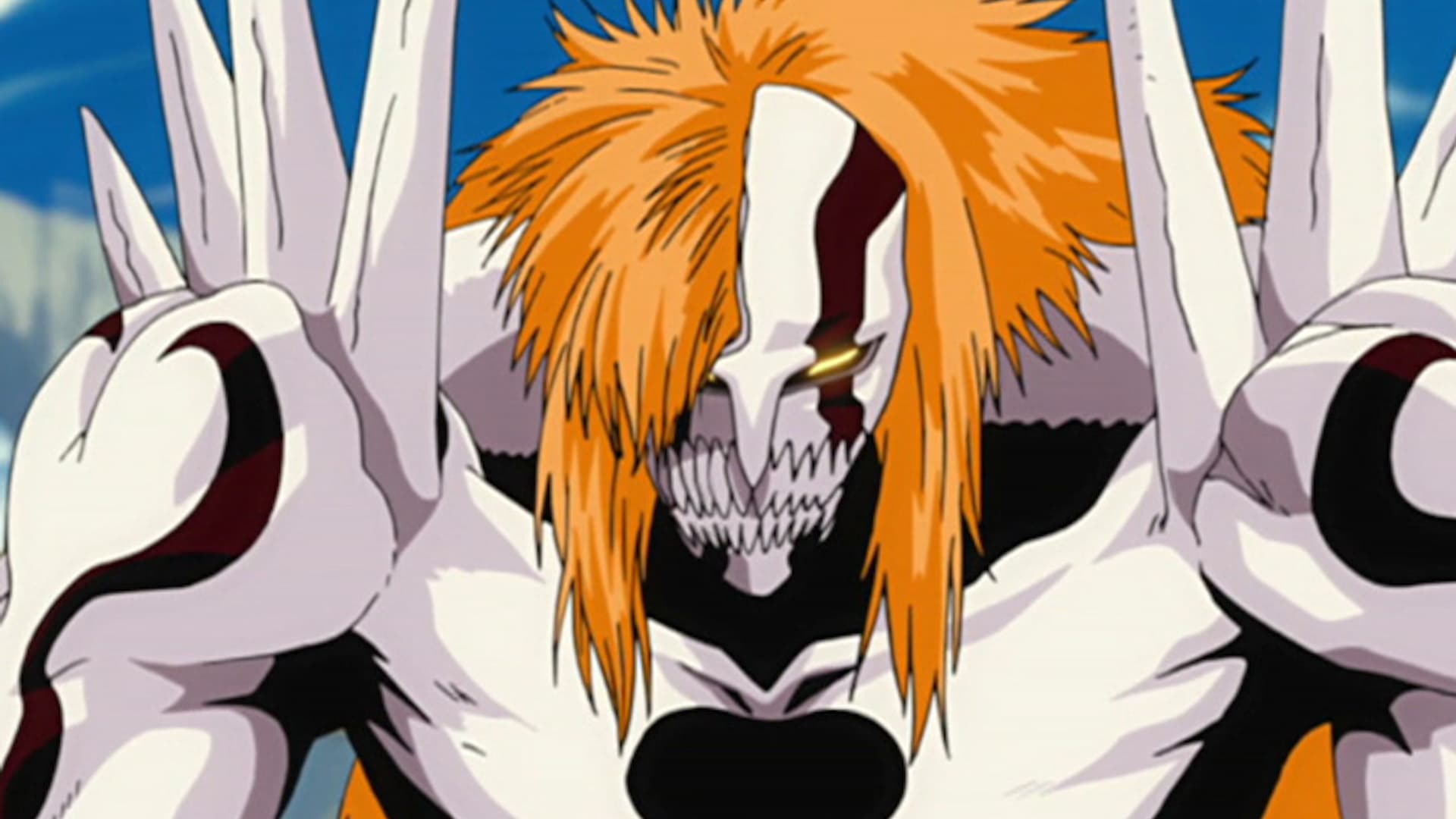
Imagine if the Hollow from Bleach opens their masks up to reveal the Demogorgon's face.

The Ghouls are born from suffering. They form as a direct result to the stagnation of the broken wheel, altar cleaners and sin eaters. They have emaciated, greyish-blue skin and a too-wide mouth of teeth. They also have a taste for human flesh, an unfortunate consequence of being a Hungry Ghost. Yet they are valued in some small communities, as the dead consumed by the ghouls do not rise again.

This but less Emo.

The animal realm overlaps too much with the human realm, almost blending perfectly within it. As such, some humans are born with animalistic features, a product of imperfect reincarnation. Some see this as a positive trait, a gift from the wilds. Others view them as abominations and burn them with the dead.
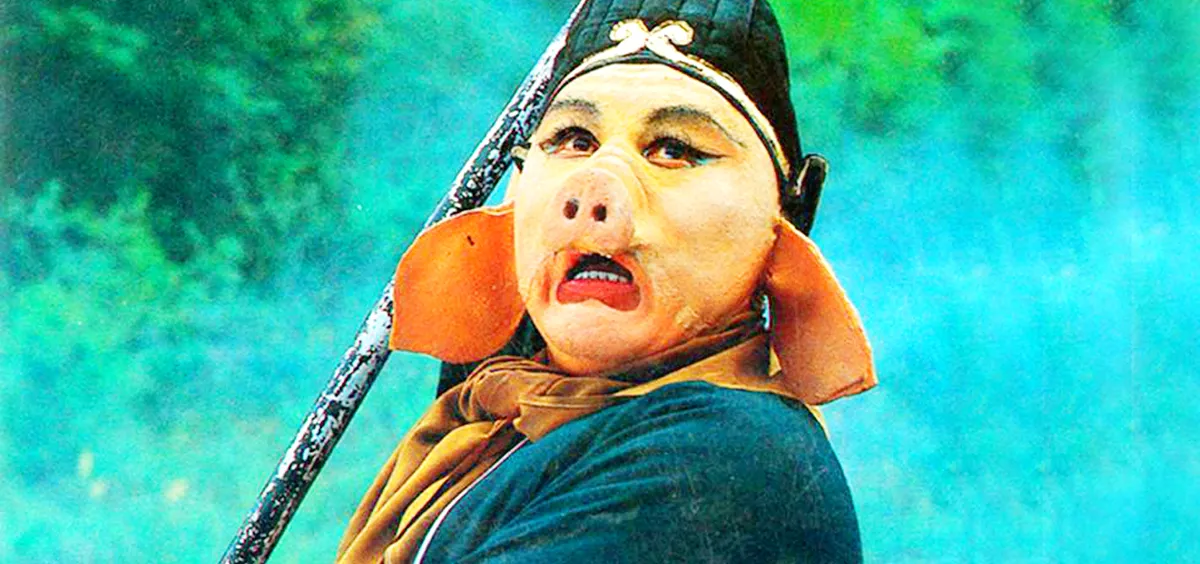
Zhu Bajie always freaked me out.

These are the key minorities that populate the Exorcised Cities of Liurza. There may be others but they are hard to come across and rarely interact properly with human society.

Monday, May 30, 2022

A Psychopomps Lookbook

 As much as PSYCHOPOMPS is a setting defined by the fantasy genre, it draws a lot of inspiration from the cyberpunk aesthetic, in terms of ruined cities and transhumanism. It seeks to evoke the Hong Kong of the movies and imagination, the neon signs obscured by cigarette smoke, the grimy, lived-in streets and houses. It seeks to depict a post-colonial Singapore, left with the ruins of a coloniser's architecture. It seeks to replicate the sweltering jungles of Malaya, verdant and lush. It seeks to reimagine the Spaghetti Western in the tropics, world-weary gunslinging monks entering a rundown border town to hunt an apostate.


The end result should be different from the generic, western medievalism or the heavily exoticised oriental daydream. It might be tinged with the oranges and reds of Buddhism, or the now greyish walls of an old colonial townhouse. Men smoke opium after a hard day's work, there is the loud chatter of the fish market in the morning. A ghoul carries a bolt-action rifle, wrapped in purple batik cloth, haggling with a rickshaw driver. A tall woman carries a jewelled sword into a hovel, wary of the pontianak that emits the floral scent permeating the road. The air is thick with humidity, its warmth rendering it an almost suffocating congealed solid. There are chillies, cloves, star anise and cardamom tickling the nose with their vibrancy of scent. Workers, their heads clothed in bandanas, straw hats or turbans, eat spiced curries and beautifully yellowed rice. The daydream is over, old uncle Lang died without a priest nearby. Someone has to exorcise the ravenous wolf-demon, its jowls dripping with foam and blood. The sage next to you tells you that wolfsbane might serve you well. You tear up little dried petals of aconite, careful to wear your gloves. You pick up the curved kris and coat the blade in wolfsbane and castor oil. Your hunt begins.

Here are some pictures that capture the look and aesthetic of PSYCHOPOMPS.

The gorgeous cityscapes from Kill Six Billion Demons.

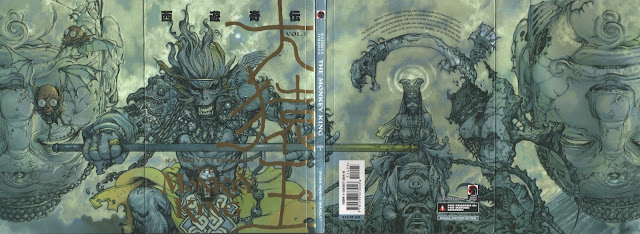
The monstrous beauty of Katsuya Terada's The Monkey King

The ragged grimy magics of Dorohedoro.

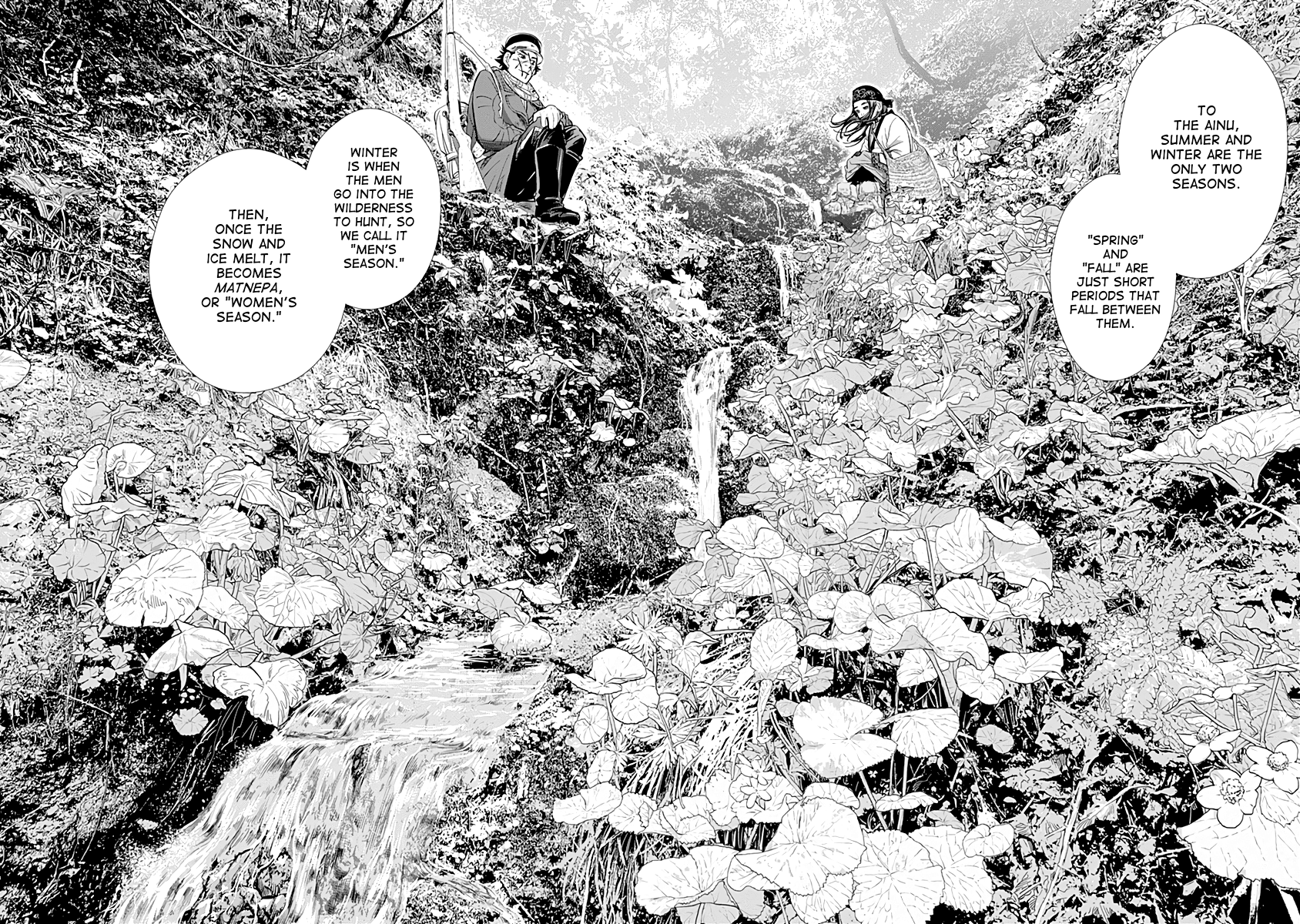
The vast, terrible immensity of nature and the frontier in Golden Kamuy.

Saturday, May 28, 2022

Samsara and Suffering

Everyone knows they were born into suffering. They knew it working at the cinnamon manufactories under the harsh working conditions of Théan overseers. They know it now in the salt mines of Corphaksa, under the harsh working conditions of the New Liurzan Administration. They know it when their village is plunged into bloodshed by a snake demon and they know it when their brothers come back as Jiangshi, thirsty for blood. The life of Man is full of suffering.

The Jiangshi or 僵尸 is a vampiric, Chinese zombie, here depicted in the movie "Mr Vampire"

Before the apocalypse, there were six realms, 3 elevated and 3 base, arranged in a circular wheel. Every mortal being would follow the cycle of reincarnation accruing good and bad karma, rising and falling through the various realms as they did so. Thus the cycle was fair and just, for good was met with good and evil was met with evil. (This claim comes from the same religious scholars that name the human realm an elevated one, so some doubt is in order). These realms were clearly defined and separated, a divine mechanism maintaining the cycle of reincarnation and distributing souls. It was a wheel encompassing the entirety of mortal existence and the cycle persisted.

Buddhist Wall Mural of Yama Holding the Wheel of Life. (Older depictions only have 5 realms)

The Shattering, the cataclysmic event that shapes the world of PSYCHOPOMPS, refers to the shattering of this wheel of reincarnation, breaking the karmic balance and the cosmic machinery that governed it. The wheel, once perfectly flat and stable, was now tilted. Departed souls would bleed back into the realm of man, unable to re-enter the cycle. The other mortal realms bleed into the realm of man, the once strict boundaries now permeable and unsecured. As all living beings died, their souls would stagnate, linger. They seek their original vessel, gravitating back to their recently vacated bodies. Yet, the souls, as it travels through a realm thick with other souls and malfunctioning reincarnation, is irrevocably warped and altered. This results in a spirit, a monster or a demon- the malformed, transformed soul re-enters the body, granting it new life and form. Yet more suffering is in order.

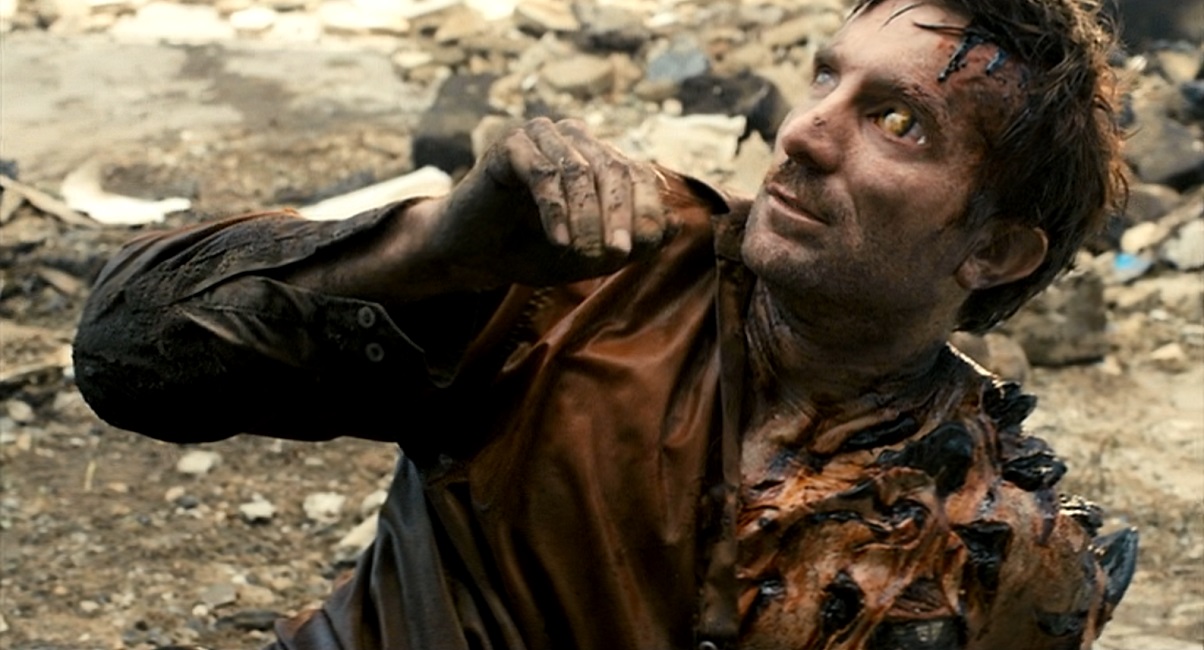
Wikus's transformation into a Prawn from the film "District 9"

The world now is a broken one, souls congealing like petrol below a faulty tank. Death is no longer merely a tragic loss but a minor disaster. A consequence of the realms bleeding is the influx of otherworldly beings from the other realms, deposited here through the cataclysm or taking refuge in the relative safety. Humanity is no longer alone in sentience, it shares its world with the other mortal beings in the realms. The Deva crash as falling stars, their original forms of light and fire now encased in the stone and rock of our material realm. Great heroes and warriors are resurrected as Asura, four-armed divine warriors full of wrath. Humans dying of deprivation- starvation, thirst, exposure- return as Ghouls, hungry ghosts cursed with an appetite for flesh. Even humanity itself is altered and every birth or resurrection may return a being not entirely human. Man is not alone in his suffering any longer.

Kill Six Billion Demons, a very significant influence.

Ghost-Hunting in the Ruins of the Empire

Most of Psychopomps is set in the on the sub-continent of Liurza. 

A rough sketch of the sub-continent of Liurza

Liurza is a land characterised by its abundance, be it of luscious jungles, bestial predators and valuable spices. The last of these particular qualities is what made it a prime target for colonialisation from its neighbours, whom have exchanged ownership of its lands for decades. Liurza was most recently a vassal state to the Théan Empire, subject to the Empress and her legions of Dragoons. When the Shattering happened, it plunged the world into abject chaos. The Théan Administrations in Liurza was called back as the Empire struggled to deal with the monstrous spirits that arose. Most governors abandoned the settlements they had ruled, rushing back to Théa to secure the lands of their birthright. Thus, the apocalypse brought with it a silver lining- the decolonising and subsequent independence of Liurza. 

The newly independent Liurzans were forced to rebuild in the midst of the turmoil and violence of the Shattering, with only the seven Exorcised Cities remaining as most of the existing cities were abandoned or destroyed, left for the dead. These Exorcised Cities represent the last remnants (and hopefully, the first roots) of Liurzan culture and society.

The Exorcised City of Corphaksa is perhaps Liurza's largest and greatest city. Corphaksa forms the backbone of Liurza's nationhood, through the construction of its White Roads. These were the salvation of Liurza, roads of monster-repelling salt that connect the Exorcised Cities into a unified Liurza. Corphaksa sits at the center of this web of white, the apparent capital of Liurza. It is through these White Roads that some form of normalcy were re-established, with trade, commerce and industry. It was in these periods of relative peace that the people could begin to rebuild the world around them.

Tower of Babel by Pieter Brugel

The discovery of the spirit-bottle changed the world almost as much as the apocalypse. It turned disaster into opportunity, danger into wealth. Any spirit of significant power, could have their ghost captured in these bottles upon exorcism. These ghosts, still roiling with spiritual energy, could then be used as a source of magical power. It powers new technologies and great works of magic, as well as the mundane necessities of existence. The value of these ghosts drive the desperate, greedy or foolish to abandon their jobs, take up arms and hunt as officially (or unofficially) licensed psychopomps. Guilds pop up like mushrooms in damp earth, all clamouring for a bit of the profit. While large guilds like the Hong Family or the Black Betels have established themselves as the premier source of exorcists and mercenaries, smaller guilds cater to the less wealthy, pacifying angry house spirits and breaking love curses. If profit can be derived from the apocalypse, one can be sure that man will find a way to do it.

Modern-day Liurza is thus set in this period of great change, of a burgeoning society attempting to reclaim its lands from both its coloniser and the monsters that now haunt it. The world is a wreck, a ruin. This is an opportunity, the world is ripe for the taking, to be rebuilt however one sees fit. 

Thursday, May 26, 2022

Introduction to PSYCHOPOMPS

 PSYCHOPOMPS is a setting that I developed for tabletop role-playing games, a fictional world in which I am able to play with the aesthetics, themes and ideas of my choosing. This blog will serve to document my ideas, collating them in a singular resource I can access. It will also serve as my medium to share this world of mine.

PSYCHOPOMPS is a fantasy, post-apocalyptic setting based on the culture and mythology of South-East Asia. It focuses on ghost hunters, the eponymous psychopomps, as they hunt the monsters and spirits haunting this ruined world. The Cycle of Reincarnation is broken and souls have nowhere to go. Everything that dies will resurrect as a spirit, a product of this stagnancy. Jilted lovers come back as terrible white-faced ghosts, with thick black hair concealing beady, red eyes. A buffalo collapsing under miserable labour, become a bull-spirit, trampling his old owner’s fields and goring his children. There are ways to prevent this, the most widespread being the rites and rituals of the Grave Priests, which establish the tenuous connection needed to send the soul to rest. Exorcised Cities have re-established some means of society and civilisation, each being safe enough that the threat of undead violence is minimal. The invention of the spirit bottle, a device through which an errant soul can be capture, and crucially, converted into spiritual energy, has transformed the spirits from terrifying monsters to exploitable resources. Guilds form in the wake of this, minor corporations seeking to employ foolhardy and dangerous individuals to capitalise on this new source of wealth. The more powerful spirits, possessing their own sentience and intelligence, are worshipped as gods or devils. Some of them contract themselves to the people, giving them a taste of their magical power in exchange for favours and gifts.


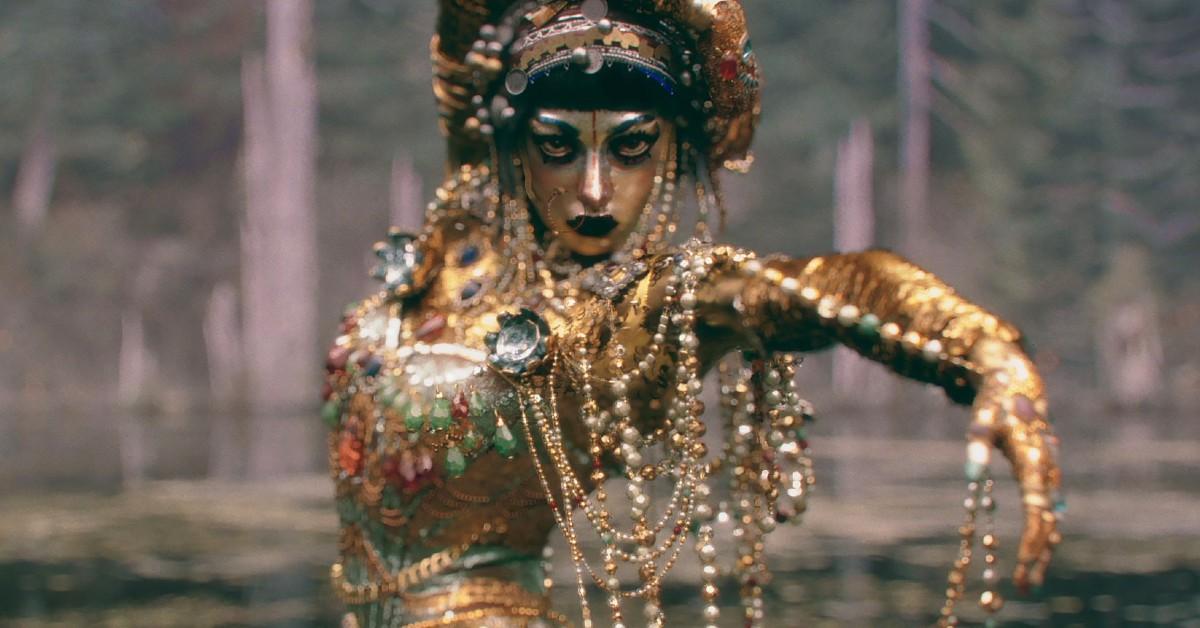
The Golden Women from the episode "Jibaro" in "Love, Death, Robots".

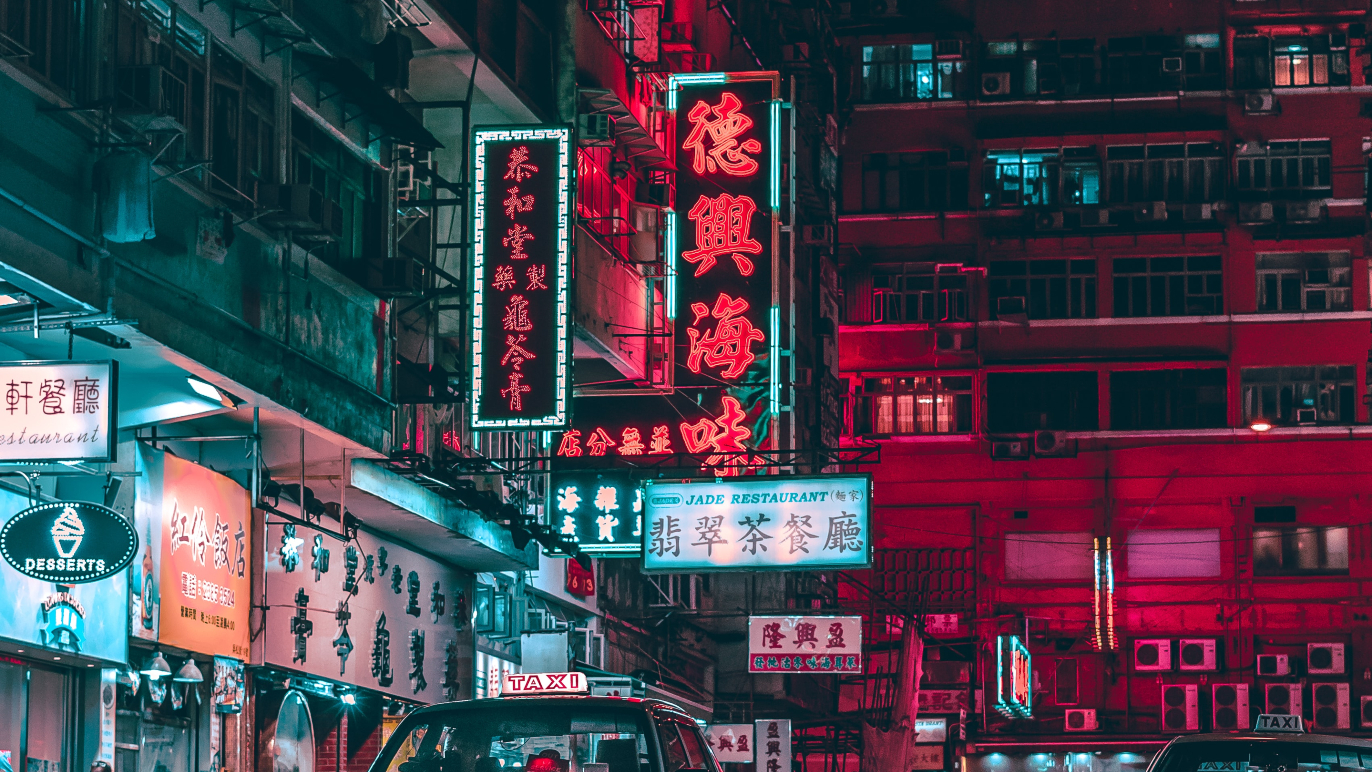
Thematically, PSYCHOPOMPS borrows a lot from the Cyberpunk genre, which exists in its bustling, overcrowded cities run by corporations and oppressive governments and the neon sprites that light up the signboards for brothels and noodle shops. It exists in the supernatural being yet another capitalistic venture and the government warlocks hunting rogue wizards. It also borrows from the Western, with grizzled veterans riding on thick, salt roads as they head to a village far in the south, hunting a serial killer turned mantis demon. Apart from the Exorcised Cities, most places are lawless and dangerous, at risk of Resurrected or more likely, human violence. It takes inspiration from South-East Asian culture and mythology, equally from Malaysian ghost stories and Buddhist teachings. Despite my upbringing as a Singaporean, I am not an expert on these matters of culture and religion and do not claim to represent any real-life religions or cultures. This is a fantasy setting as much as it draws from the world around me.

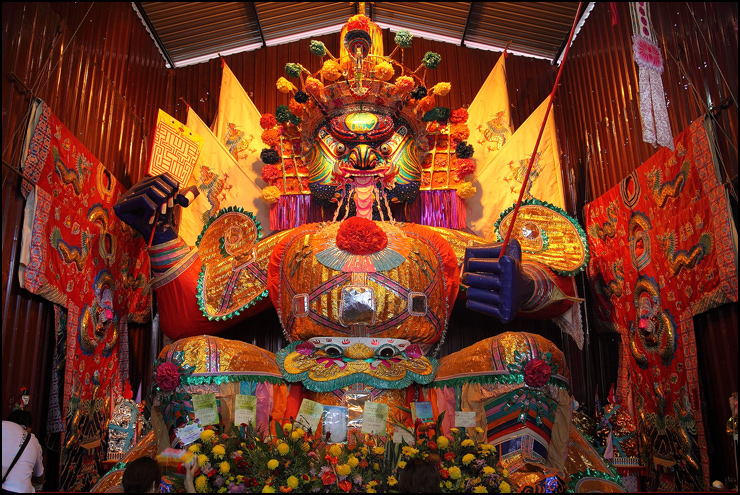
Celebrating the Hungry Ghost Festival

The Neon Signs of Hong Kong


This is meant to be a brief introduction to the world of PSYCHOPOMPS and hopefully I will be able to flesh out and illustrate it in more detail in my next few blog posts.

Introduction to PSYCHOPOMPS

  PSYCHOPOMPS is a setting that I developed for tabletop role-playing games, a fictional world in which I am able to play with the aesthetic...